Faceless Marketing
Faceless Marketing: Why More Creators Are Building Brands Without Showing Their Face
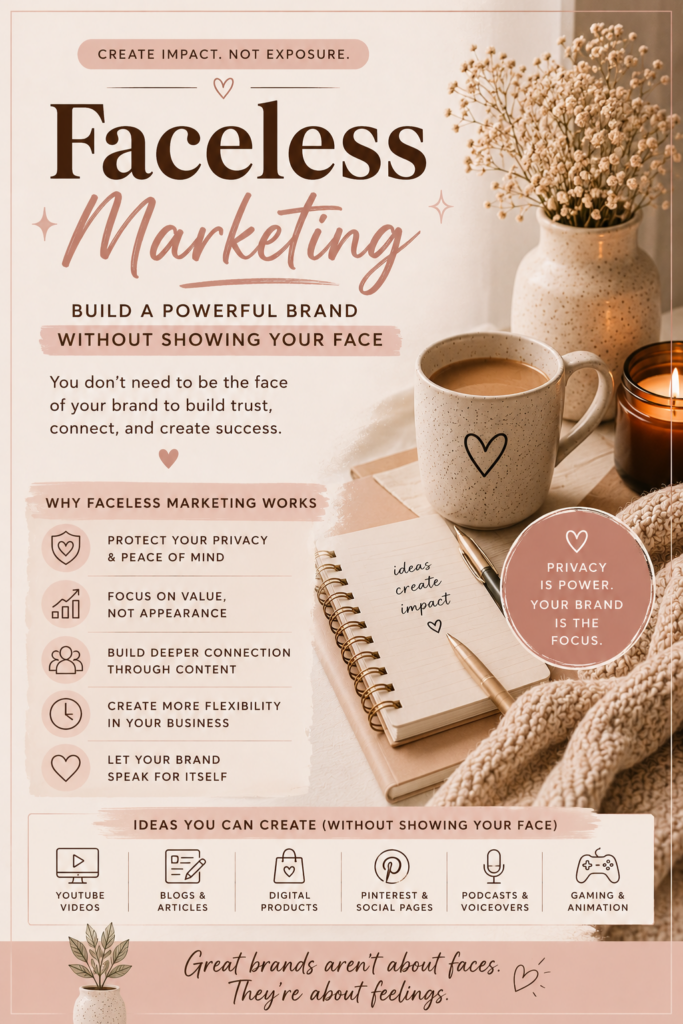
For years, the internet told us the same thing:
To build a successful online business, you needed to become the brand.
Show your face.
Share your life.
Film your routines.
Talk on camera daily.
Turn yourself into content.
And for some creators, that works beautifully.
But for many others?
It feels exhausting, uncomfortable, overwhelming — or simply unnecessary.
That’s why faceless marketing is exploding right now.
Not because people are hiding.
But because creators are finally realizing they can build powerful brands without sacrificing their privacy.
What Is Faceless Marketing?
Faceless marketing is exactly what it sounds like:
Building an online brand without centering your personal identity or appearance.
Instead of relying on selfies, daily vlogs, or constant personal exposure, faceless creators focus on:
- ideas
- aesthetics
- storytelling
- products
- voice
- community
- visuals
- education
- entertainment
The brand becomes the focus — not the creator’s face.
And in 2026, that model is working incredibly well.
Why Faceless Brands Are Growing So Fast
The internet has changed dramatically over the past few years.
Audiences are becoming more interested in:
- niche communities
- comforting aesthetics
- relatable storytelling
- useful content
- personality-driven brands
- curated experiences
Ironically, many audiences now care less about influencers acting like celebrities.
People want connection — but connection doesn’t always require visibility.
A faceless creator can still build:
- trust
- loyalty
- emotional connection
- recognizable branding
- strong communities
without showing their face every day.
Privacy Is Becoming Valuable Again
Many creators are beginning to rethink how much of themselves they want online.
Burnout, oversharing, parasocial pressure, and internet criticism have pushed people toward more intentional content creation.
Faceless marketing gives creators room to:
- protect their peace
- separate business from personal life
- create without constant appearance pressure
- avoid influencer burnout
- maintain anonymity if desired
For introverts especially, faceless marketing can feel incredibly freeing.
You no longer need to perform your entire life to build a successful business.
Faceless Doesn’t Mean Personality-Free
This is one of the biggest misconceptions.
A faceless brand should still feel human.
The strongest faceless creators develop:
- a recognizable tone
- emotional storytelling
- visual identity
- consistent messaging
- community culture
People connect with energy just as much as appearance.
Think about some of the most successful modern brands:
- cozy Pinterest accounts
- aesthetic blogs
- themed Instagram pages
- digital product shops
- animation channels
- niche TikTok accounts
- mascot-driven brands
- stationery businesses
- gaming creators
Many succeed because of atmosphere and identity — not because audiences know exactly what the creator looks like.
The Rise of Character & Aesthetic Branding
One major trend within faceless marketing is the rise of brand worlds.
Instead of building around a single personality, creators are building:
- mascots
- themed aesthetics
- fictional universes
- comforting brand identities
- seasonal branding
- lifestyle-focused content
This works especially well on platforms like Pinterest, blogs, YouTube, and TikTok where visuals matter deeply.
Audiences increasingly follow brands because they enjoy the feeling they create.
Faceless Marketing Works Especially Well For…
Faceless marketing can work in almost any niche, but it thrives particularly in:
- digital products
- blogging
- printables
- cozy lifestyle brands
- kawaii brands
- seasonal content
- education
- gaming
- planning and stationery
- podcasting
- affiliate marketing
- YouTube automation
- aesthetic social accounts
In many of these spaces, the product or atmosphere matters more than the creator’s identity.
You Don’t Need Fancy Equipment
One of the best parts of faceless marketing is how accessible it can be.
You can create content using:
- stock footage
- graphics
- voiceovers
- animations
- screen recordings
- Pinterest pins
- blog posts
- flat lays
- product mockups
- AI-assisted visuals
- aesthetic photography
The barrier to entry is often much lower than traditional influencer culture.
The Real Secret? Consistency
Faceless marketing isn’t a magic shortcut.
You still need:
- strong branding
- useful content
- consistency
- strategy
- audience understanding
- clear messaging
The difference is that your face is no longer the product.
Your ideas are.
And for many creators, that feels far healthier and more sustainable long term.
Final Thoughts
Faceless marketing isn’t about hiding.
It’s about creating with intention.
It allows creators to build brands that feel creative, comforting, strategic, and authentic — without sacrificing every part of their personal lives for content.
In a world where oversharing has become normalized, privacy itself has become powerful.
And honestly?
Some of the most memorable brands online today are the ones built around atmosphere, storytelling, and emotion — not selfies.
You do not need to become an influencer to build something meaningful online.
Sometimes the strongest brand presence comes from letting the work speak for itself.